Zwilling J.A. Henckels International Classic 15-Piece Review: Authentic German Engineering or Just a Marketing Trap?
Let’s cut to the chase. You’re likely staring at this block set because you saw the name “Henckels,” you saw a massive discount code, and you saw a price tag that didn’t make your wallet bleed. But then you noticed something: the logo. It’s not the two little stick figures you see on the knives in a Williams Sonoma glass case. It’s one guy holding a halberd (a pole weapon).
That’s the “One Man” logo. And in the culinary world, that usually means “budget.”
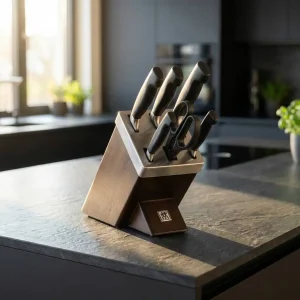
I’ve spent 15 years in kitchens ranging from high-volume French brigades to obsessively precise Japanese sushi bars. I typically refuse to touch knife blocks. They are usually coffins for bad steel—filled with tools you don’t need and serrated edges that tear protein rather than slice it. However, the Zwilling J.A. Henckels International Classic 15-Piece Set is an anomaly. It claims to be forged (not stamped) but comes in at an entry-level price point.
I picked this set up to answer one question: Is this the high-end stuff used in Michelin kitchens disguised in a budget box, or is it just cheap department store metal stamped with a fancy German name? I’ve prepped enough mirepoix to fill a swimming pool, so I know exactly what a “value” knife feels like at 5 PM versus 9 PM. Here is the raw data.
The Identity Crisis: What Does “International Classic” Actually Mean?
First, we need to clear up the branding confusion because Henckels makes this intentionally murky. There are two main tiers:
- ZWILLING (The Twins): Made in Germany (usually). Premium pricing. Harder steel.
- HENCKELS INTERNATIONAL (The Single Man): Value-oriented. Made in China, Thailand, or Spain. Softer steel.
The “Classic” line sits in a weird middle ground. Unlike the cheaper “Statement” or “Definition” lines which are often stamped out of a sheet of metal like a cookie cutter, the Classic series is fully forged. This means the bolster, blade, and tang are formed from a single piece of steel. That matters for balance and durability.
However, these are Made in Spain, not Solingen, Germany. Does that matter? For quality control, sometimes. For the steel chemistry? Not really. Steel doesn’t care what language the smith speaks; it cares about heat treatment. But knowing they are Spanish-made explains the price drop compared to the German “Pro” series.
The Metallurgy Report: X50CrMoV15 (The Steel Nerd Breakdown)
If you think “German Steel” is a magical element, let me bring you back to earth. This set uses standard X50CrMoV15 stainless steel. In the metallurgy world, this is the vanilla ice cream of knife steels. It’s everywhere.
The Specs
- Carbon: 0.5% (This provides the hardness).
- Chromium: 15% (This provides the stain resistance—it won’t rust easily).
- Molybdenum/Vanadium: Trace amounts for grain structure and toughness.
- Hardness (HRC): 55-57 HRC.
Compare this to a Japanese VG10 blade which sits at 60-61 HRC. The Henckels Classic is significantly softer. Is that bad? Not necessarily. In a high-volume kitchen, softer steel is tougher. If you drop this knife, or if you accidentally hit a chicken bone, the edge will roll (bend) rather than chip (break).
The trade-off is edge retention. This steel gets “tired” fast. It feels a bit gummy on the whetstone—it doesn’t release the burr cleanly like a high-carbon Japanese blade. You will be honing this thing constantly to keep it singing.
Ergonomics & Geometry: The “Pinch Grip” Inspection
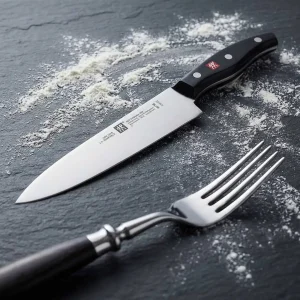
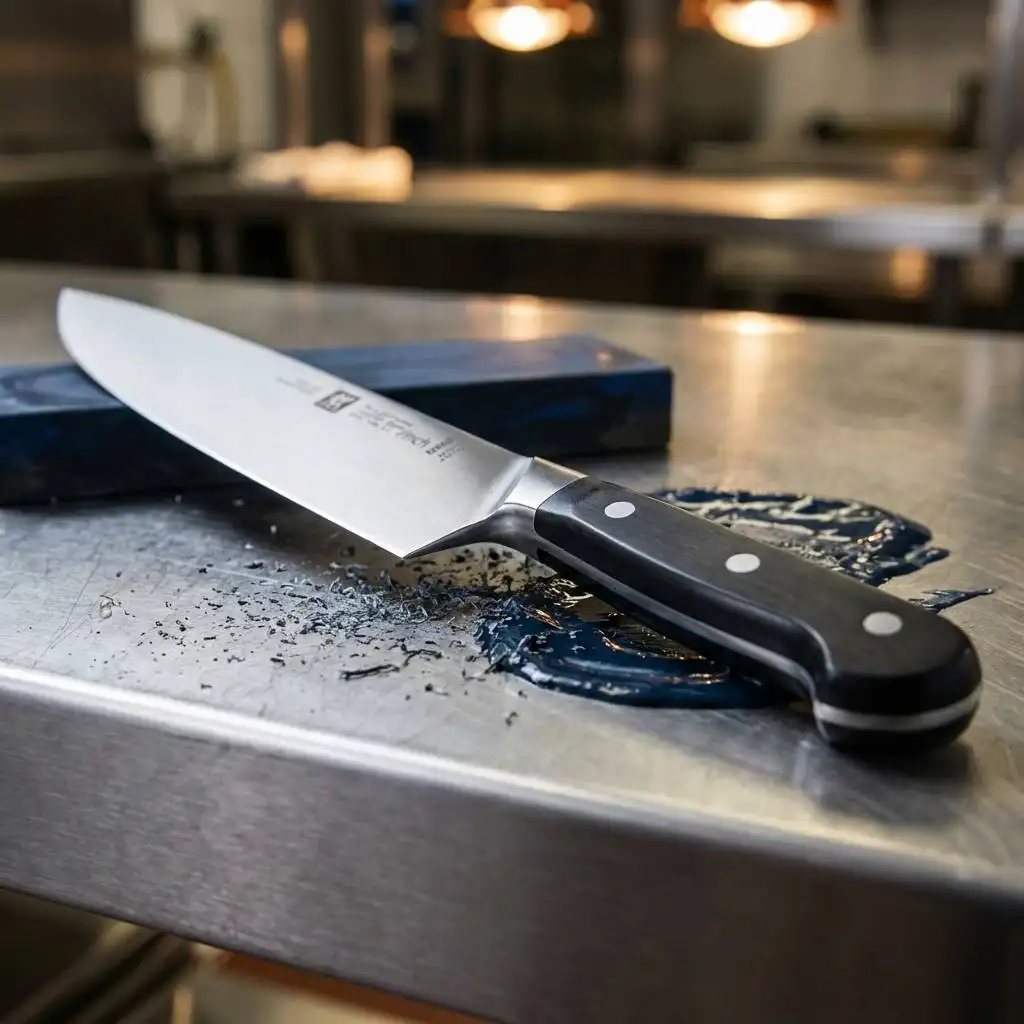
I grabbed the 8-inch Chef’s knife to test the ergonomics. The handle is black POM (polyoxymethylene) with a traditional triple-rivet design. It’s a classic look that mimics the expensive Wüsthofs or Zwilling Pros. The scales are flush with the tang—no gaps to trap bacteria, which is a solid pass on the hygiene check.

The Bolster Complaint (Read This Carefully)
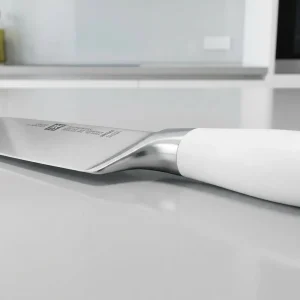
Here is where I have to get critical. This knife features a full bolster. That’s the thick band of steel between the handle and the blade that runs all the way down to the heel.
Marketing teams call this a “finger guard.” I call it a sharpening nightmare.
As you sharpen a knife over the years, you remove material from the edge, making the blade narrower. However, you cannot grind down the thick bolster easily on a stone. Eventually, the bolster becomes higher than the blade edge. This creates a gap where the heel of the knife won’t touch the cutting board. You’ll try to chop through a scallion, and the tip will cut, but the heel will leave an accordion of uncut green onions. It is a massive design flaw for longevity, but it provides weight and balance for the average user.
The Board Test: Performance Under Pressure
I put the “Big Three” (Chef, Utility, Paring) through a standard dinner service prep.
The 8″ Chef’s Knife (The Workhorse)
I started with the Carrot Test. I’m looking for wedging—when the spine is so thick it cracks the vegetable open before the edge cuts it. The Classic has a bit of girth at the spine. It wedged slightly on thick carrots, making a “crack” sound. It’s not a laser. However, on the Herb Test (rock-chopping cilantro), the belly curve was excellent. It has a dramatic curve that encourages rocking, which is great for home cooks who haven’t mastered the push-cut.
The Paring Knife
Solid. The tip is fine enough for coring strawberries or hulling tomatoes. It feels substantial in the hand, not like those flimsy plastic-handled ones you get at the dollar store.
The Serrated Utility & Steak Knives
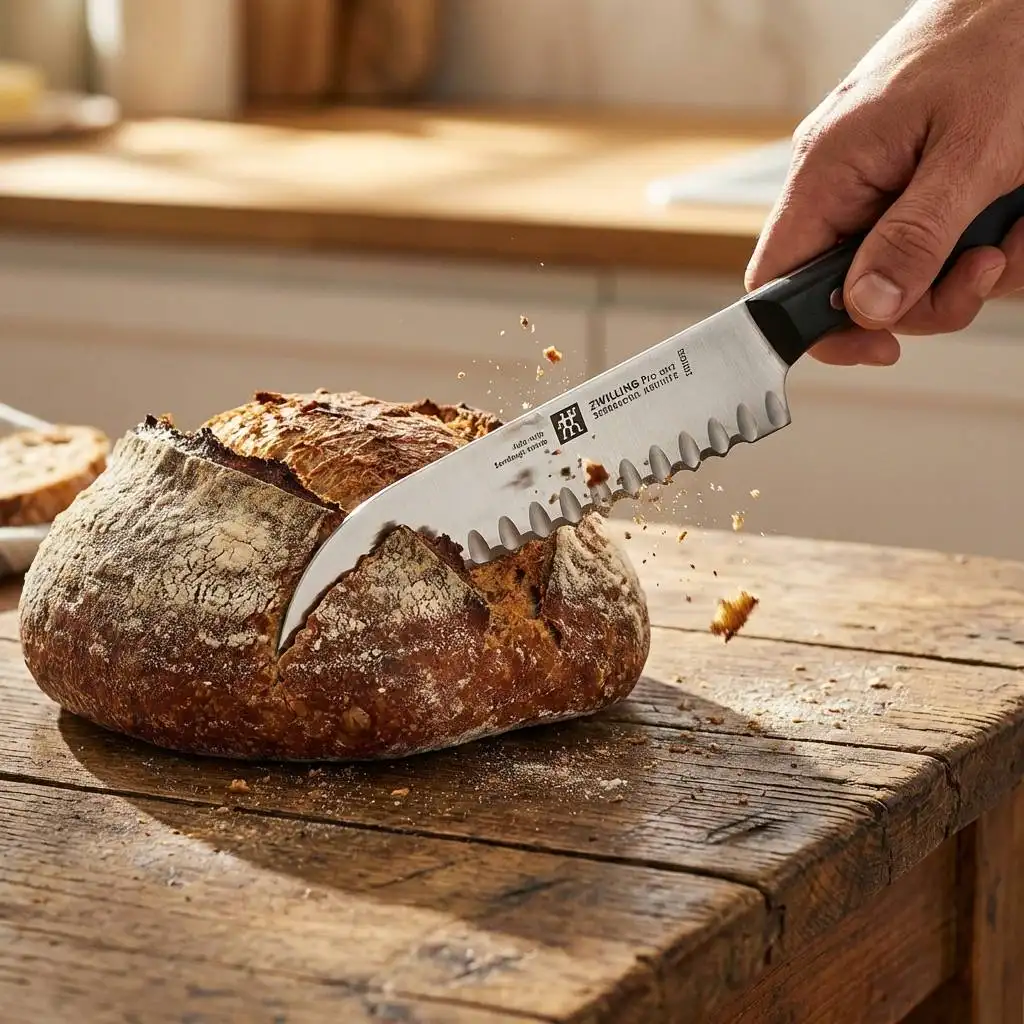
The set comes with 6 steak knives. This is usually where brands cheat and give you stamped metal. Surprisingly, these are decent, though they are serrated. I prefer fine-edge steak knives because they slice meat without shredding the fibers, but serrated edges stay sharp for years without maintenance. For a family set, the serration is the practical choice.
The Filler Factor: Analyzing the 15 Pieces
Let’s look at the “Block Bloat.” Do you really need 15 pieces?
| Tool | Verdict | Notes |
|---|---|---|
| 8″ Chef’s Knife | Essential | The main driver. Good balance, heavy. |
| Honing Steel | Crucial | With steel this soft (55 HRC), you need this daily. |
| Kitchen Shears | Passable | They cut well, but I prefer shears that come apart for cleaning. |
| 7″ Santoku | Redundant | If you have the Chef’s knife, you rarely need this, but the hollow edge helps release potatoes. |
| Steak Knives (x6) | Filler? | Takes up nearly half the block. Good if you host dinner parties, waste of space if you don’t. |
Maintenance: The Reality of Soft German Steel
Because this is X50CrMoV15, the edge retention is average. If you cook every day, you will lose that “hair-popping” sharpness within two weeks.
The Protocol:
- The Rod is God: You must hone this knife on the included steel rod before every heavy prep session. It realigns the microscopic teeth of the edge.
- Stone Work: You will need to put this on a real whetstone (1000/6000 grit) about every 3 to 4 months.
- The Dishwasher Rule: If I see these in a dishwasher, I’m walking out. The heat cycles will expand and contract the rivets, eventually cracking the POM handles. Hand wash only, dry immediately.
Price-to-Performance Ratio
We need to talk value. The Zwilling Pro line costs nearly three times as much as this Classic set. Is the Pro three times sharper? No. But it has a half-bolster (better for sharpening) and better fit and finish.
On the other hand, a Victorinox Fibrox chef’s knife costs about $45. It is ugly, stamped, and has a plastic handle, but the geometry cuts better than this Henckels. It’s thinner behind the edge.
However, you aren’t just buying performance; you are buying the aesthetic. The Henckels International Classic looks professional on a counter. It’s heavy, forged, and feels durable. For the price of one premium Japanese knife, you get an entire block that will last 20 years if you don’t abuse it.
The Verdict: A Line Cook’s Honest Take
The Zwilling J.A. Henckels International Classic 15-Piece Set is the Toyota Camry of knife sets. It is not exciting. It will not impress a sushi chef. It doesn’t have exotic powdered steel or a handle made of stabilized burl wood.
But it starts every time. It is forged, tough, and can take a beating.
The Pros:
- Fully forged construction creates excellent balance.
- Durable steel resists chipping.
- Classic triple-rivet aesthetic looks high-end.
- Great warranty support.
The Cons:
- The full bolster is a long-term maintenance flaw.
- Steel is soft and requires frequent honing.
- Spine is thick, causing wedging in dense root vegetables.
If you are a home cook who wants a uniform, durable set that looks good and cuts reliably, buy it. If you are looking for laser-like performance and hate honing your knives, save your money and buy individual Japanese blades.