Zwilling J.A. Henckels 12pc Steak Dinner Cutlery Set Review: Surgical Precision or Shiny Table Decoration?
There is nothing worse—and I mean nothing—than resting a perfectly seared, medium-rare ribeye for ten minutes, getting the juice redistribution exactly right, only to massacre the grain structure with a cheap, saw-toothed steak knife. It breaks my heart. I’ve worked the pass in kitchens where we spent thousands on Japanese Gyutos for the prep team, maintaining 6,000 grit edges, but then FOH (Front of House) would hand the customers 50-cent serrated pry-bars to eat with.
It’s an insult to the cow, the farmer, and the cook. Most “dinner sets” are just jewelry for the table—pretty to look at, high polish, but they tear meat rather than slicing it. They are designed for the dishwasher, not the dinner. Today, we’re putting the Zwilling J.A. Henckels 12pc steak dinner cutlery set through the grinder. I want to know if this is actual cutlery capable of clean severance, or just a wedding registry space-filler.
The Brand Confusion: Twins vs. Single Man
Before we look at the metallurgy, we have to navigate the minefield that is this brand’s naming convention. If you are new to this, listen closely because they try to trick you.
There is Zwilling (The “Twins” logo) and there is J.A. Henckels International (The single “Halberdier” logo). Generally, the Twins mean German heritage, higher standards, and usually, actual forged steel. The single guy with the stick usually implies stamped steel made in Spain, China, or Thailand to a budget spec.
This specific 12-piece presentation set often straddles a weird line. It carries the Zwilling name, implying premium status. However, unlike their kitchen knives which are friodur ice-hardened high-carbon steel, these dinner sets are often monobloc construction stainless. If I have to dig through three PDFs to find out if the steel was smelted in Solingen or stamped out in a massive factory in Shanghai, they are hiding something. In this case, we are likely looking at a “lifestyle” product rather than a performance tool.
The Specs (What You’re Actually Buying)
Let’s strip away the fancy box and look at the data. As a steel nerd, this is where the marketing fluff dies and the physics begins.
| Feature | Specification |
|---|---|
| Steel Composition | 18/10 Stainless Steel (Handle & Body) |
| Construction | Monobloc (Single piece construction) |
| Hardness (HRC) | Not Rated (Soft Austenitic Steel) |
| Edge Type | Serrated (Saw-tooth) |
| Packaging | Wooden Presentation Box (Faux mahogany finish) |
The Chief’s Analysis: Here is the issue. “18/10” is marketing speak for 18% chromium and 10% nickel. It’s fantastic for preventing rust and keeping that high-polish shine that impresses your mother-in-law. But for a knife? It’s garbage. 18/10 is austenitic stainless steel—it cannot be heat-treated to a high hardness. It will never take a razor edge.
If the entire knife is 18/10, it’s essentially a butter knife with teeth filed into it. The best steak knives use a high-carbon martensitic steel blade (hard, sharp) welded to a stainless handle (pretty). This set appears to be monobloc 18/10. We are starting off with a handicap.

Ergonomics & Balance: The “Greasy Hand” Test
When you are eating a steak, your hands aren’t dry. You’re dealing with rendered fat, maybe some condensation from a wine glass. Grip texture matters.
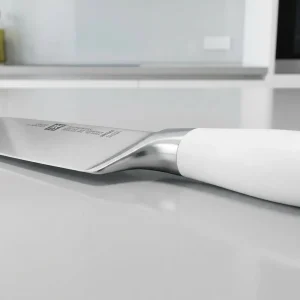
These knives feature a high-polish, mirror finish. Visually? They look like surgical instruments. Tactilely? They are slippery. In a standard pinch grip, or the more common “index finger on spine” grip used at the dinner table, there is zero traction. If you have a particularly juicy ribeye, this handle turns into a bar of soap.
The balance point is also problematic. Because it is a monobloc construction (solid metal), the handle is heavy. It wants to fall backward out of your hand. A good chef’s knife is blade-heavy or neutral to help the cut; these are handle-heavy to keep them from falling off the plate. It feels solid—I’ll give them that—it doesn’t feel like the hollow tin stamped knives you get at a diner. But it lacks the finesse of a tool designed by someone who actually cuts meat for a living.
The Geometry & Grind: Slicing vs. Sawing
Let’s be honest: Serrated steak knives are crutches for people who cook their meat to the texture of shoe leather. If your steak is tender, you should be able to cut it with a spoon. If you need a saw, you messed up the cook.
However, I live in reality. Most dinner plates are ceramic. If you use a fine-edged straight blade on ceramic, you will roll the edge in three bites. The ceramic is harder than the steel. So, for a dinner set, serration is a necessary evil to protect the edge from the plate.
Zwilling uses a fairly aggressive scallop pattern here. It’s not the refined micro-serration you see on high-end French Laguiole knives. It’s a tear-and-rip geometry. The “mouthfeel” is also something we need to discuss. Because the knife is 18/10 stainless, it is relatively thick behind the edge to maintain structural integrity. When you lick the knife (don’t do that) or slide it off the fork, it feels clunky. It lacks the distal taper of a forged blade.
Performance: The Board & Plate Test
I put this set up against a sous-vide flank steak and a bone-in pork chop. Here is the verdict from the cutting board.
The Fiber Analysis:
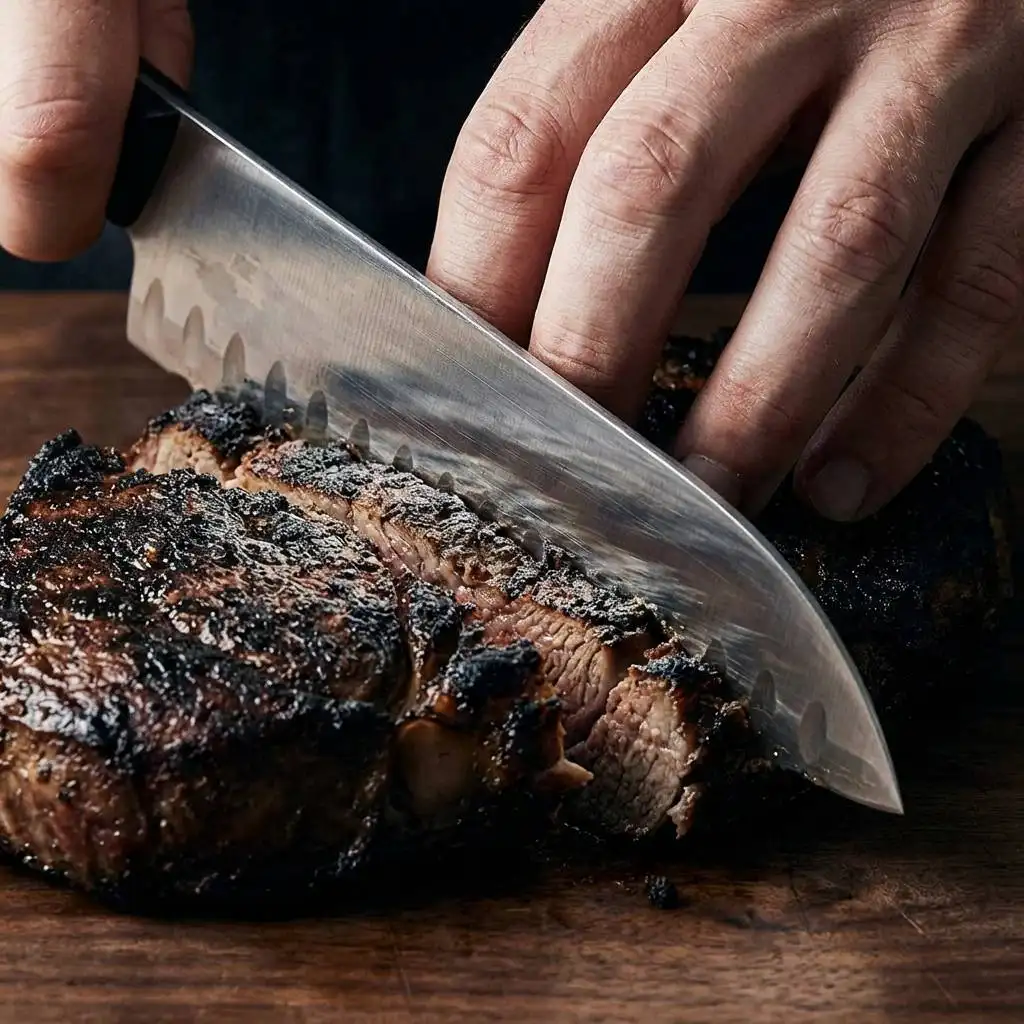
When you push a straight-edge knife through meat, the fibers separate cleanly. The cut surface is red and glossy. When I used the Zwilling 18/10 serrated knife, the cut required a back-and-forth sawing motion. The result? The cut face of the meat was slightly ragged and greyish. You are tearing the protein structure, not severing it. You are squeezing juice out onto the plate rather than keeping it in the bite.
The Plate Scratch:
This is a positive for the softer steel. Harder steels (like VG10 or SG2) will gouge your nice bone china, leaving grey scratch marks that won’t wash off. Because this Zwilling set is softer steel, it is less likely to scar your plates. It’s a trade-off: worse cutting performance for better plate preservation.
Durability & Maintenance (The Dishwasher Argument)
I forbid anything with an edge from entering the dishwasher. It is the “hot cycle of death” for cutlery. The detergent is abrasive, and the heat messes with temper (on high-carbon blades). However, these are 18/10 stainless table knives.
The Reality: You can throw these in the dishwasher. They are tank-like in their corrosion resistance. That high nickel content that makes them soft also makes them nearly rust-proof. If you are lazy, or if you trust your kids to clear the table, these will survive. They won’t pit, and they won’t spot easily.
The Box:
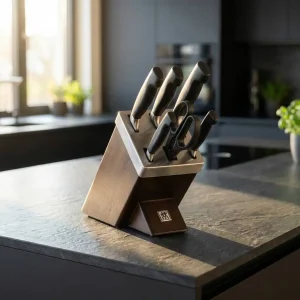
A quick note on the storage box. It looks nice on the website, but in person, the hinges are often the weak point. It’s usually a veneer over MDF with a plastic insert covered in flocking. It does the job of keeping them organized, but don’t expect heirloom woodworking.
Price-to-Performance Ratio
You are paying for the Zwilling name and the “mise en place” aesthetic of a matching set. If you broke down the cost per knife, you are paying a premium for 18/10 steel that, frankly, is cheap to produce.
If you compare this to a Wüsthof Classic Ikon steak knife (which is forged high-carbon steel), the Wüsthof wipes the floor with this set in terms of cutting ability—but one Wüsthof steak knife might cost as much as half of this entire box. Compared to generic department store sets, the finish on the Zwilling is superior—no rough edges on the handle, good polish. But strictly speaking on performance? You are paying for the table jewelry, not the cutting edge.
Final Verdict: Who Is This For?
If you want a table setting that looks like a banquet hall—uniform, shiny, and impressive to guests who don’t know metallurgy—buy this set. It is durable, dishwasher safe, and won’t rust.
However, if you want to respect the Wagyu you just cooked, buy a straight-edge set instead. Or, find a set that uses high-carbon steel for the blade.
Pros:
- Extremely rust-resistant (18/10).
- Dishwasher friendly.
- High-polish aesthetic looks expensive FOH.
Cons:
- Soft steel cannot hold a true edge; relies on tearing serrations.
- Slippery handles.
- Heavy, clunky balance.
FAQ: Common Questions About Henckels Steak Sets
Are Zwilling steak knives dishwasher safe?
Technically, yes. Most of their 12-piece presentation sets are made from 18/10 stainless steel, which is highly resistant to rust and corrosion in the dishwasher. However, strictly speaking, no high-quality knife should go in the dishwasher as the detergent can dull the serrations over time and the clattering can scratch the mirror finish.
Do these knives need sharpening?
No, and you effectively can’t sharpen them. The serrated edge on these 18/10 stainless knives is designed to saw through food. Once the teeth wear down (which will take years of use on ceramic plates), the knife is essentially done. You cannot easily sharpen serrations on soft stainless steel without specialized equipment.
What is the difference between 18/10 and 18/0 stainless steel?
The numbers refer to the percentage of Chromium and Nickel. 18/10 contains 18% chromium and 10% nickel. The nickel provides a high-polish shine and excellent rust resistance. 18/0 contains no nickel; it is magnetic and harder, but more prone to rust and has a duller, greyish finish. For table jewelry, 18/10 is preferred. For cutting edges, neither is ideal compared to high-carbon steel.