Zwilling Four Star 7-Piece Review: A German Workhorse or Yesterday’s News?
Let’s cut the marketing fluff immediately. You are staring at a price tag for a knife set that was designed in 1976. You are asking yourself: Is this “classic” German engineering that will last a lifetime, or are you paying for a brand name attached to soft steel and outdated geometry?
I’ve spent over 15 years in professional kitchens, from high-volume French brigades to precision-obsessed Japanese counters. I’ve seen the Zwilling Four Star series everywhere. They are the cockroaches of the culinary world—and I mean that as a compliment. You cannot kill them. I have seen line cooks open #10 cans with the chef’s knife and drop the shears into deep fryers, and the tools survived.
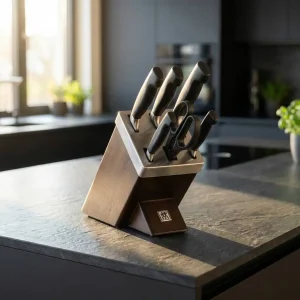
But durability isn’t performance. I don’t care about the “Twin” logo or the heritage; I care about carbide distribution, HRC numbers, and edge geometry. Today, we are putting the Zwilling Four Star 7-Piece Block Set on the bench to see if it still deserves a spot in your mise en place.
The Context: 1976 Called, It Wants Its Knife Back (But Should You Give It?)
The Four Star line is Zwilling J.A. Henckels’ best-selling series globally. When it launched in the mid-70s, that seamless, molded synthetic handle was revolutionary. It meant no gaps for bacteria to hide, which made health inspectors happy.
However, the cutlery landscape has shifted massively since then. We aren’t just comparing this set to cheap department store stamped metal anymore. We are comparing it to a flood of Japanese VG10 and powdered steel options that offer superior edge retention at similar price points. The question isn’t whether the Four Star is a “good” knife; the question is whether a 57 HRC German steel blade can compete in a world of 61+ HRC lasers. We need to determine if this is a precision instrument for a serious home cook, or just a blunt force object for the “rough” user.
The Specs: Deconstructing the “Friodur” Hype
Let’s look at the metallurgy. Zwilling uses a proprietary formula they simply call “Special Formula Steel,” but any metallurgist knows it’s essentially X50CrMoV15.
- Carbon (0.5%): Just enough to get hard, not enough to be brittle.
- Chromium (15%): High stain resistance. You can leave this wet on the counter (don’t do that) and it likely won’t rust.
- Hardness (~57 HRC): This is the critical number. In the real world, 57 HRC is soft. It means the edge will roll over rather than chip. It won’t hold a “scary sharp” edge like a Shun (61 HRC) or a Miyabi, but it can take significantly more abuse.
You’ll see the term “Friodur” stamped on the blade. Marketing teams love this word. In the pit, we call it cryo-treatment. They heat the steel, then freeze it to sub-zero temperatures. This isn’t magic; it precipitates the carbides and optimizes the grain structure for corrosion resistance and stability. It makes the steel tough, but it doesn’t change the physics: this is still a relatively soft German stainless steel.

The Anatomy: Ergonomics & The Bolster Controversy
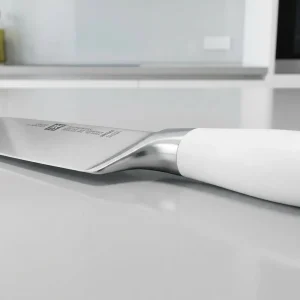
The handle is molded polypropylene. Because it’s bonded directly to the tang without rivets, it is incredibly hygienic. However, to a purist, it can feel a bit “soulless.” It lacks the tactile feedback of a micarta or wood handle. It’s light—sometimes too light—shifting the balance point forward toward the blade.
The “Full Bolster” Problem
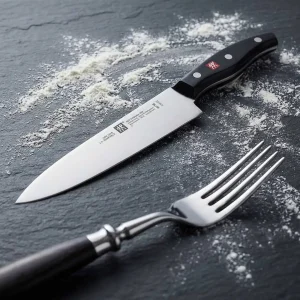
Here is where I have a major issue with this set. The Four Star features a full bolster—that thick hunk of metal that runs from the handle down to the heel of the blade. Zwilling markets this as a safety feature to stop your finger from slipping.
I call it a design flaw. The full bolster prevents you from sharpening the entire length of the blade. Over time, as you sharpen the edge, the steel recedes, but the bolster does not. Eventually, the bolster becomes the lowest point of the knife. When you try to chop, the bolster hits the cutting board before the edge does, leaving your onions linked together like an accordion. It turns knife maintenance into a nightmare unless you have a professional grinder to grind down the bolster.
The 7-Piece Breakdown: Tool by Tool
A set is only as good as its most useless piece. Here is the inventory check:
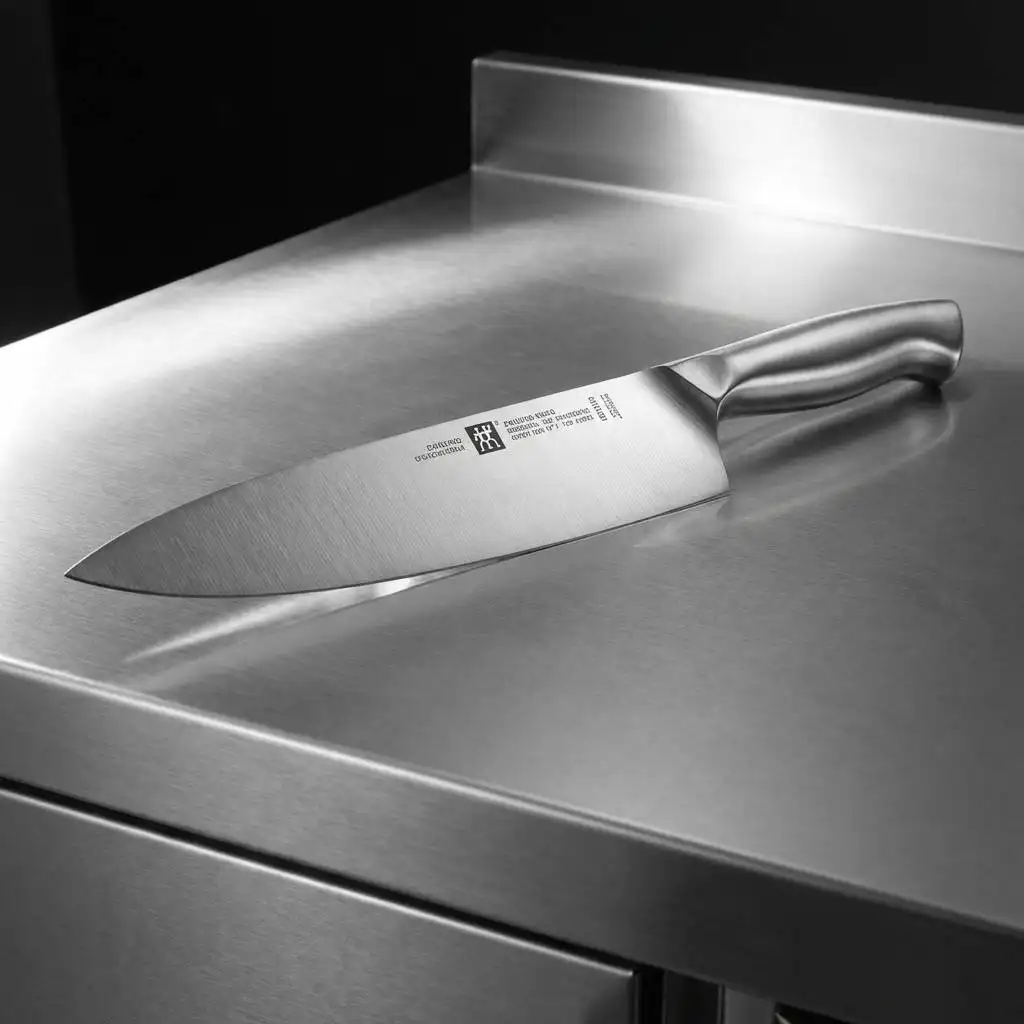
- 8-inch Chef’s Knife: The workhorse. It has a significant “belly” (curve), making it ideal for the Western rock-chop motion. The spine is thick, providing heft, but it lacks distal taper.
- 5-inch Serrated Utility: The “sandwich knife.” It’s fine for cutting tomatoes if your chef’s knife is dull, or sawing through a crusty roll.
- 4-inch Paring Knife: A solid tool, though the bulky handle on the Four Star line can feel clumsy for fine, in-hand work like turning mushrooms or peeling garlic.
- Bread Knife: The serrations are aggressive. It tears softer breads slightly but decimates hard crusts.
- Sharpening Steel: Clarification required: This is a honing rod, not a sharpener. It does not remove metal; it realigns the microscopic teeth of the soft 57 HRC edge. With this steel type, you will need this tool daily.
- Kitchen Shears: Credit where it’s due—Zwilling shears are legendary. These things act like bolt cutters. They will go through poultry bones and lobster shells without complaining.
- The Block: Standard beechwood. Solid footprint, decent finish.
Performance: The Board Test
We took the chef’s knife to the board. Here is the sensory feedback.
The Tomato Test
Out of the box, the factory edge is polished. It bites into tomato skin with minimal pressure. However, because the steel is soft, that initial “bite” fades after a few heavy prep sessions.
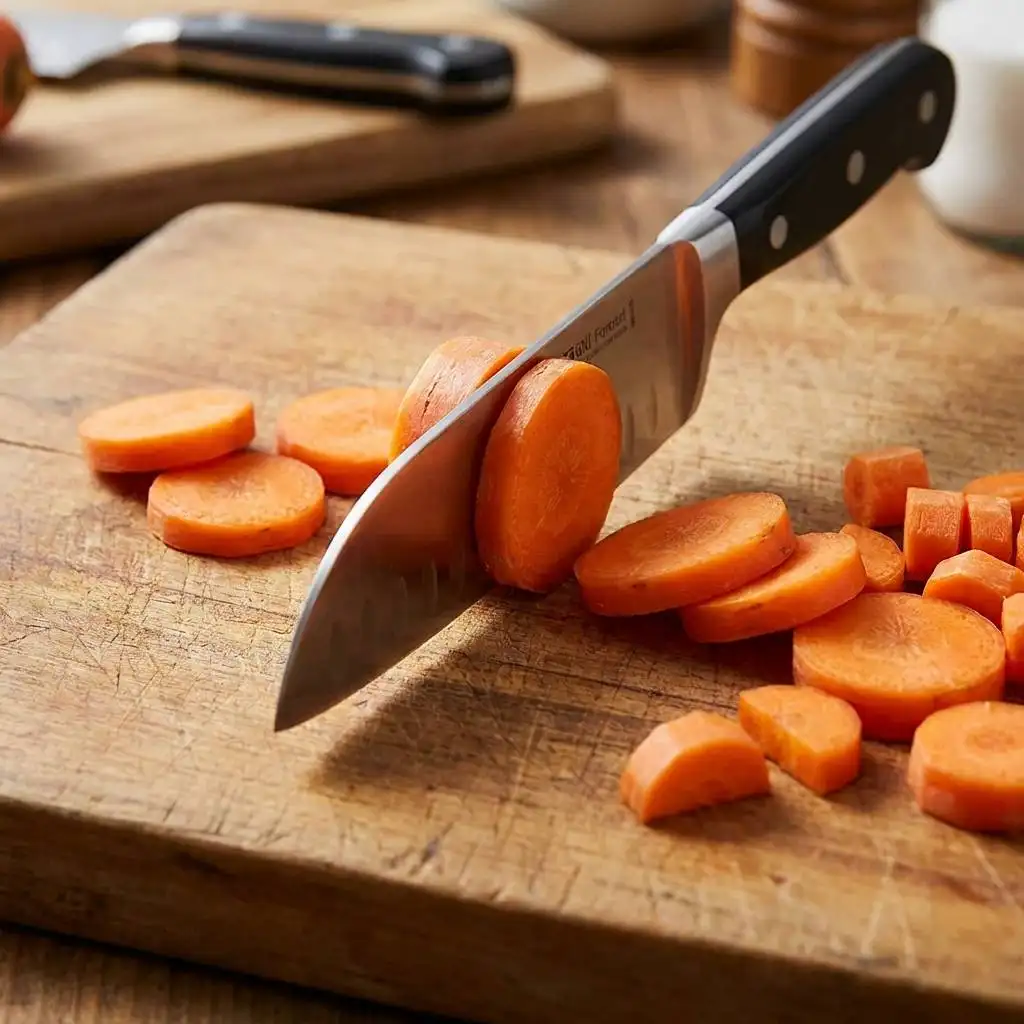
The Carrot Test (The Wedge Factor)
This is where German geometry shows its weakness. When vertical chopping a thick carrot, the knife doesn’t slide through silently; it makes a loud crack. The blade is thick behind the edge, causing it to “wedge” or split the vegetable like an axe rather than slicing it. If you are used to thin Japanese lasers, this will feel clumsy.
The Protein Test
Slicing through raw chicken breast and flank steak revealed the benefit of the belly. The rocking motion is smooth. The weight of the knife does some of the work for you, which is helpful if your technique is lazy.
Edge Retention & Maintenance: The Reality of 57 HRC
If you buy this set, you are signing up for a relationship with your honing rod. The X50CrMoV15 steel is resilient, but it suffers from edge rollover. After prepping a few pounds of mirepoix, you will feel the edge dragging.
The Maintenance Schedule:
- Daily: 4-6 swipes on the honing rod before every use.
- Quarterly: A session on whetstones (1000/3000 grit).
The good news? This steel is incredibly easy to sharpen. It feels a bit “gummy” on the stone compared to the crisp feedback of carbon steel, but you don’t need expensive diamond plates to raise a burr. You can get a razor edge back in five minutes.
Durability Note: If you drop a Japanese knife, the tip snaps off. If you drop the Zwilling Four Star, you dent your floor. That is the trade-off.
Verdict: Who is this set for?
The Zwilling Four Star is the Toyota Camry of kitchen knives. It is not exciting. It is not high-performance. But it will start every morning and get you to work.
Pros:
- Virtually indestructible blade and handle.
- Excellent warranty and customer support.
- Hygienic, gap-free construction.
- Shears are best-in-class.
Cons:
- Soft steel requires constant honing.
- Full bolster makes long-term sharpening frustrating.
- Thick geometry causes wedging in dense produce.
- Outdated aesthetic.
The Final Cut
If you are a cooking enthusiast chasing “scary sharp” edges and enjoy the ritual of knife care, skip this. The soft steel and full bolster will drive you crazy. However, if you are buying for a busy family kitchen where the knives might accidentally end up in the dishwasher (don’t do it, but if you do, these will survive) or be used to hack through semi-frozen food, the Zwilling Four Star 7-Piece Set is a solid investment. Just wait for a sale; never pay full MSRP for 1976 technology.
FAQ: Common Questions from the Line
Can I put Zwilling Four Star knives in the dishwasher?
Physically, yes. The handle won’t crack and the steel is highly rust-resistant. Morally? No. The heat and harsh detergents will degrade the handle over time and bang the edges against other cutlery, dulling them instantly. Hand wash only.
What is the difference between Zwilling Pro and Four Star?
The steel is identical. The difference is geometry and ergonomics. The Zwilling Pro features a “curved bolster” (half bolster) which allows you to pinch grip comfortably and sharpen the entire length of the blade. The Pro is the better design; the Four Star is the cheaper, older design.
How often should I sharpen the Four Star set?
You need to hone (use the rod) every single time you cook. You need to sharpen (remove metal on a stone) every 3 to 4 months depending on usage.
Is Zwilling better than Wüsthof?
This is the Coke vs. Pepsi of the knife world. Wüsthof generally uses a slightly harder heat treat (58 HRC) and their Classic line feels heavier with a POM handle. Zwilling Four Star feels lighter and softer. It comes down to whether you prefer a heavy handle or a lighter, molded grip.