The Costco Henckels Trap: Are You Buying Professional Steel or Shiny Scrap Metal?
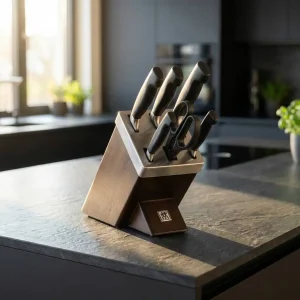
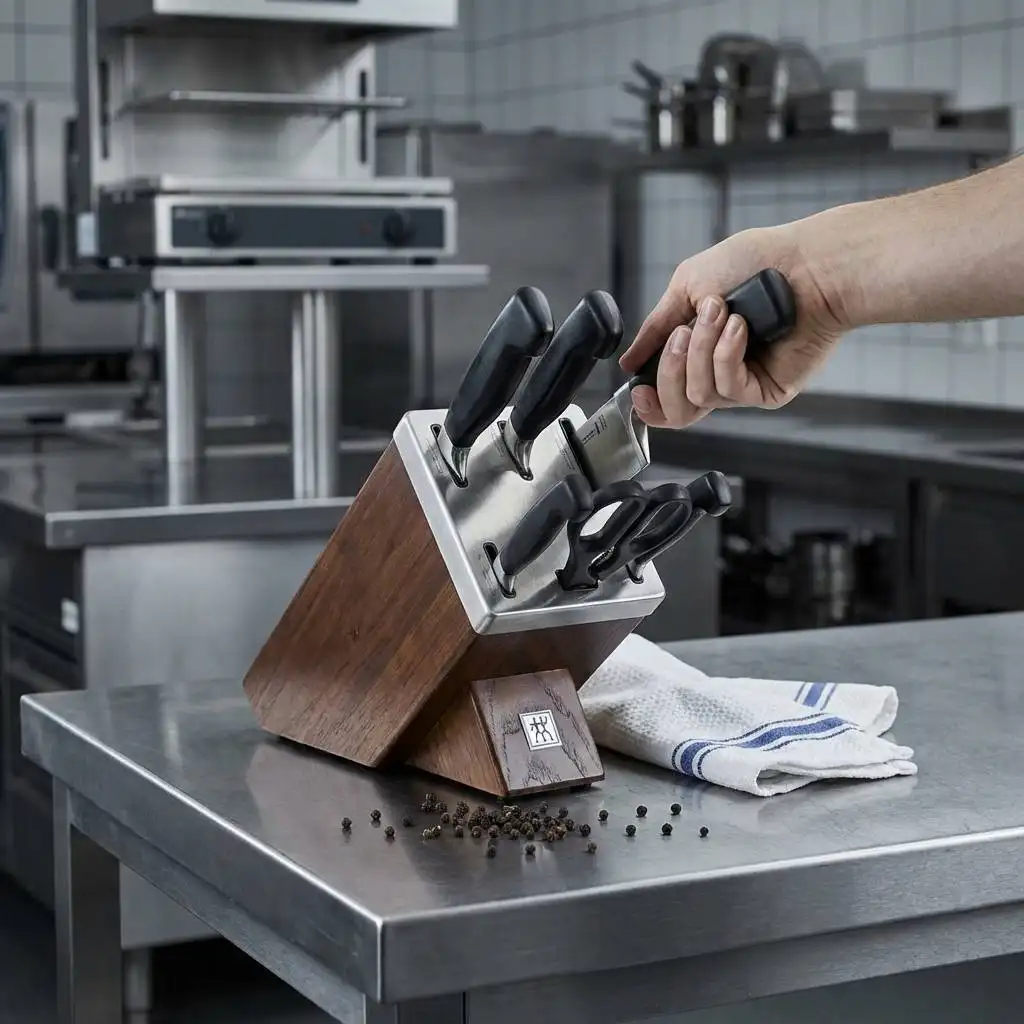
You’re walking the concrete floors of Costco, dodging the sample carts and the families fighting over rotisserie chickens. Then you see it. A massive pallet stacked high with boxes: a 15-piece Henckels knife block set for a price that defies logic—usually hovering around $150 or $200. You stop. You know the name “Henckels.” It’s German. It’s supposed to be the good stuff.
But your gut kicks in. Why does a single 8-inch chef’s knife cost $160 at a specialty cutlery store, but here you can get an entire bucket of steel for the same price? What is the catch?
I’ve spent over 15 years on the line, from high-volume French brigades to precision-obsessed Japanese counters. I don’t care about the heritage stamped on the box; I care about the grain structure, the heat treat, and whether the edge is going to die on me halfway through a Friday night rush. I walked into Costco last week and physically pulled one of these “Statement” boxes off the pallet to inspect the specs. Let’s see if this Costco special can actually cut, or if it’s just a glorified butter knife with a fancy logo.

The “Twin” vs. The “Single Guy”: Decoding the Logo
Here is where 90% of home cooks get played. Henckels is not just one brand; it is a tiered system designed to confuse you. When you look at that box in Costco, you need to look at the logo on the blade, not just the name on the cardboard.
There are two main players here:
- Zwilling J.A. Henckels (The Twins): The logo features two little stick figures. This is the premium line. Usually forged in Germany (Solingen), Friodur ice-hardened, and made of higher-grade steel.
- Henckels International (The Single Guy): The logo is a single stick figure holding a halberd (looks like a spear). This is the “value” brand. These are manufactured in Spain, Thailand, or China.
Costco almost exclusively stocks the Henckels International lines (specifically the Statement, Solution, or Definition sets). They aren’t selling you “fake” knives, but they are selling you an entry-level product masquerading as high-end cutlery. If you think you are getting a steal on German-forged steel, look again. You are likely buying Chinese steel stamped with a German name.
The Specs: What Exactly is in the Costco Box?
Let’s strip away the marketing fluff about “high-quality stainless steel” and look at the metallurgy. If you are eyeing the Henckels Statement block set—the most common Costco SKU—here is the reality of what you are holding.
The Steel (Metallurgy Deep Dive)
You are not getting high-carbon VG10 or even the proprietary special formula steel found in the Pro “S” line. These sets typically use 3Cr13 or standard X50CrMoV15 (if you’re lucky). In plain English? It’s soft stainless steel. It is highly rust-resistant, which is great if you leave your knives wet (don’t do that), but it lacks the carbide volume to hold a scary sharp edge.
Hardness (HRC)
These blades clock in around 53–57 HRC on the Rockwell scale. For context, a decent Japanese Gyuto sits at 60–62 HRC. Why does this matter? Soft steel rolls. The minute this edge touches a cutting board, the metal bends over microscopically. You aren’t chipping it—it’s too soft to chip easily—but you are dulling it instantly. You will need to hone this steel constantly to keep it cutting.
Construction: The “Forged” Lie
The packaging will scream “Fine Edge Forged.” Don’t be fooled. True forging involves hammering a single bar of hot steel into shape. These Costco sets often use a process where a stamped blade is welded to a bolster to look like a forged knife. It adds weight, sure, but it doesn’t change the grain structure of the blade itself.
Geometry & Grind: The “Carrot Wedge” Factor
A knife’s ability to cut isn’t just about the edge; it’s about the geometry. This is where mass-produced cutlery fails the hardest.
The spine thickness on these Henckels International knives is often too thick behind the edge. When you try to slice a dense vegetable, like a carrot or a sweet potato, the knife doesn’t slice through—it wedges. You push down, the thick shoulders of the blade push the vegetable apart, and *CRACK*. You aren’t cutting; you’re splitting wood. This is lazy grinding.
And let’s talk about the “Factory Edge.” Out of the box, these knives will shave hair off your arm. Do not be impressed. That is a wire edge created by a high-speed belt sander. It is toothy and aggressive, but because the steel is soft (remember that 55 HRC?), that wire edge will fold over after your first week of meal prep.
Ergonomics and The “Pinch Grip” Test
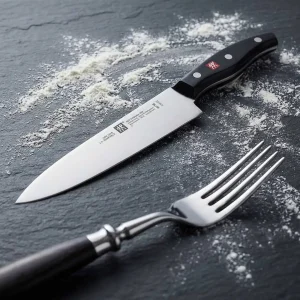
I grabbed the chef’s knife from the display model to test the feel. The handle is a black polymer—essentially durable plastic. It’s triple-riveted, which provides a classic look and ensures the scales don’t pop off, but the texture is slick. If you have animal fat or water on your hands during prep, this thing is going to slide.
The Balance Point
Because these knives often have heavy handles and lighter, stamped blades, the balance point shifts back toward the wrist. This makes the tip feel “floaty.” You lose that tactile feedback where the knife feels like an extension of your hand. You have to work harder to control the cut.
The Bolster Problem (My Personal Enemy)
Most of these sets feature a full metal bolster—that thick band of steel joining the handle to the blade that runs all the way down to the heel. I hate full bolsters. Why? Because they prevent you from sharpening the entire length of the blade. As you sharpen the knife over time, the edge recedes, but the bolster doesn’t. Eventually, the bolster sits higher than the edge, preventing the heel from touching the cutting board. You end up with an accordion cut where the vegetables are still attached at the bottom.
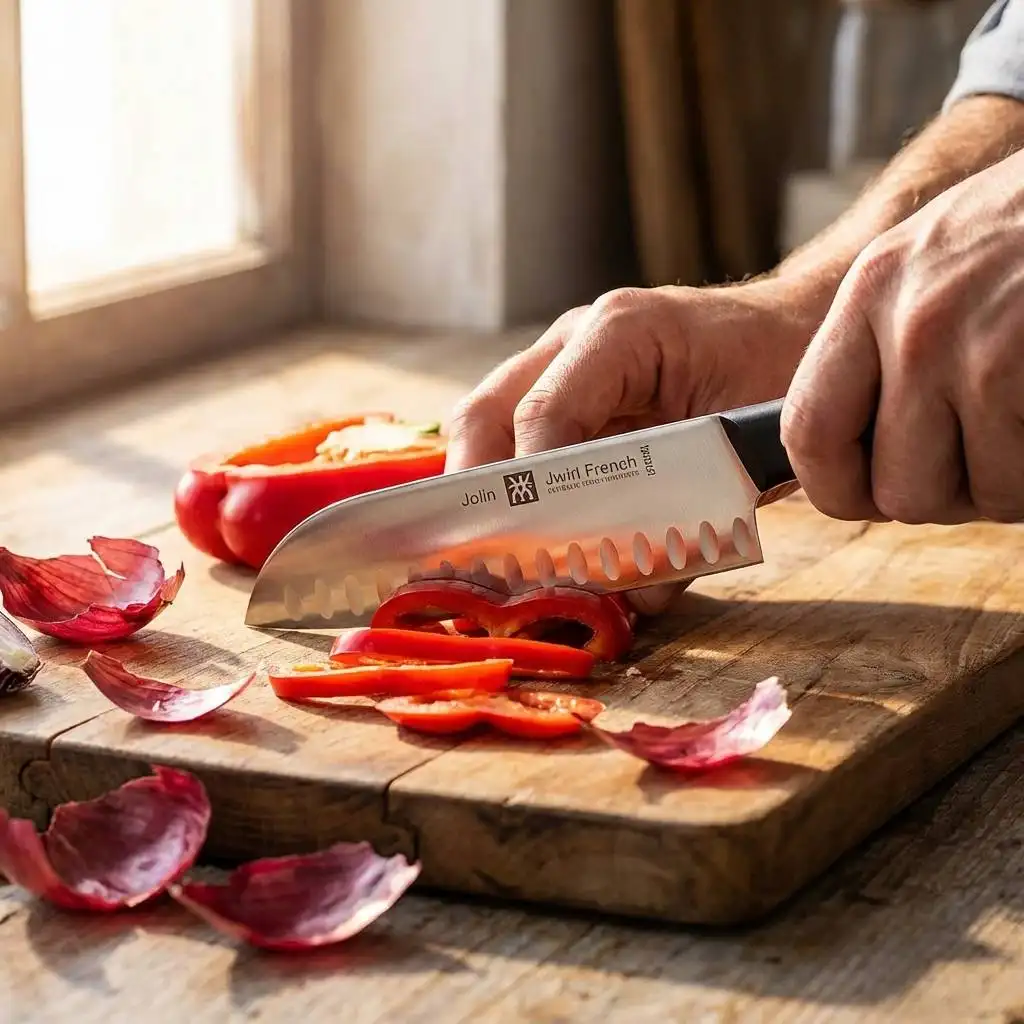
Performance Stress Test: The Board Exam
If you take this set home, here is exactly what will happen during your mise en place.
The Tomato Test
Day 1: It glides. The skin yields immediately.
Day 30: The skin resists. You have to use a sawing motion to break the surface tension. The knife squishes the tomato before cutting it.
The Protein Test
I look for how a knife handles silver skin on a tenderloin or the fat cap on a brisket. A sharp, hard steel bites into the membrane and separates it cleanly. The Costco Henckels set tends to slide over the silver skin unless you apply significant pressure. It lacks the “tooth” and aggression needed for precise butchery.
Edge Retention
In a professional kitchen, this edge would die in about two hours. At home, assuming you cook dinner five nights a week, you will need to use the honing rod every single time you pull the knife out of the block. If you are lazy with maintenance, this knife will be a dull spoon within a month.
The “Filler” Problem: Why Block Sets are a Rip-off
Let’s do the math on that 20-piece set. You are getting:
- 1 Chef’s Knife (The only one you really need).
- 1 Bread Knife (Useful).
- 1 Paring Knife (Useful).
- 17 pieces of clutter.
The “Utility Knife,” the “Santoku” (which overlaps with the Chef’s knife), the “Boning Knife” you’ll never use, and the shears. But the biggest offender? The steak knives. Those 8 steak knives taking up half the block are usually stamped from thin sheets of metal with miserable serrations that tear meat rather than slicing it. You are paying for the visual impact of a full counter, not for cutting performance.
And that honing rod included in the block? It’s often barely harder than the knives themselves. If the rod isn’t significantly harder than the blade, it won’t realign the edge properly. It’s a placebo tool.
Who Should Actually Buy This? (The Verdict)
Look, I’m a snob about steel, but I’m also a realist. Not everyone needs a $300 laser-beam Gyuto that chips if you look at it wrong.
The “Beater” Argument
If you have teenagers who throw knives in the sink, or a spouse who puts cutlery in the dishwasher (which destroys the handle and dulls the edge instantly), then the Costco Henckels set is a solid buy. It is tough, rust-resistant, and cheap enough that you won’t cry when someone uses the tip to pry open a jar.
The Enthusiast Warning
If you actually enjoy cooking—if you care about the sensory feel of the cut—do not buy this. Take that $150 and buy one high-quality Chef’s knife (like a Tojiro DP or a Mac MTH-80) and a 1000/6000 grit whetstone. You will have a tool that outperforms this entire block for a decade.
Price-to-Performance Ratio: 6/10. Great volume for the price, mediocre steel.
FAQ: Common Costco Cutlery Questions
Are Costco Henckels knives real or fake?
They are real, but they are usually from the “Henckels International” line (single stick figure logo), which is the budget-friendly, entry-level brand manufactured in China or Spain, not the premium German “Zwilling” line.
Can I put the Henckels International set in the dishwasher?
The box might say “dishwasher safe,” but as a professional, I say absolutely not. Dishwasher detergent is abrasive and will dull the edge, while the high heat and water pressure will eventually crack the polymer handles and cause the rivets to corrode.
How often do I need to sharpen the Costco Henckels set?
Because the steel is relatively soft (around 55 HRC), you should hone them with the included rod before every use. You will likely need a full sharpening on a stone or electric sharpener every 1 to 3 months depending on usage.
What is the difference between Henckels Statement and Definition sets?
Both are value lines. The main difference is the handle design. The Statement features a classic triple-rivet handle with a metal end cap, giving it better balance. The Definition usually has a lighter, simpler handle construction. The steel quality is virtually identical.