J.A. Henckels International Silvercap 14-Pc Set: UPC Verification & The “Steel Nerd” Review
You are likely standing in the aisle of a big-box store or staring at a confusing Amazon listing right now. You’re trying to figure out if this is the real German steel or just a branded knockoff. The naming conventions of the Zwilling J.A. Henckels group are notoriously messy, designed to capture every price point from “dorm room” to “professional line cook.”
I’ve spent 15 years in kitchens ranging from high-volume French brigades to precision-focused Japanese counters. I usually wield high-carbon steel that rusts if you look at it wrong. But I respect a good “beater” set for home use—if the geometry makes sense and the price reflects the steel grade. Let’s cut through the marketing noise, verify the UPC so you know exactly what you’re buying, and then look at the metallurgy to see if it’s actually worth opening your wallet.
The Specs: UPC and Model Verification
Let’s get the data out of the way first. Henckels has dozens of lines that look identical from five feet away. If you are trying to price match or confirm inventory, these are the numbers you need for the standard J.A. Henckels International Silvercap 14-Piece Block Set.
- UPC (Universal Product Code): 035886293707
- Manufacturer Item Number: 13550-005 (Standard Black Block variation)
- Blade Material: Micro-serrated (Steak knives) / Fine Edge (Prep knives)
- Construction: Stamped
Why does this matter? Because “Henckels” produces different tiers of knives using vastly different alloys. Verification ensures you aren’t paying “Classic” (forged) prices for “Silvercap” (stamped) construction. The Silvercap is an entry-level line, and the UPC confirms you are looking at the mass-market version, not the premium Solingen production.

“International” vs. “Zwilling”: Understanding the Logo
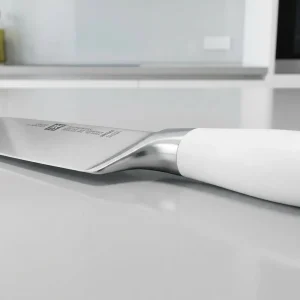
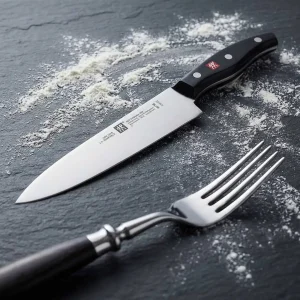
Here is the quickest way to spot the quality difference without looking at a spec sheet: Look at the logo etched on the blade near the bolster.
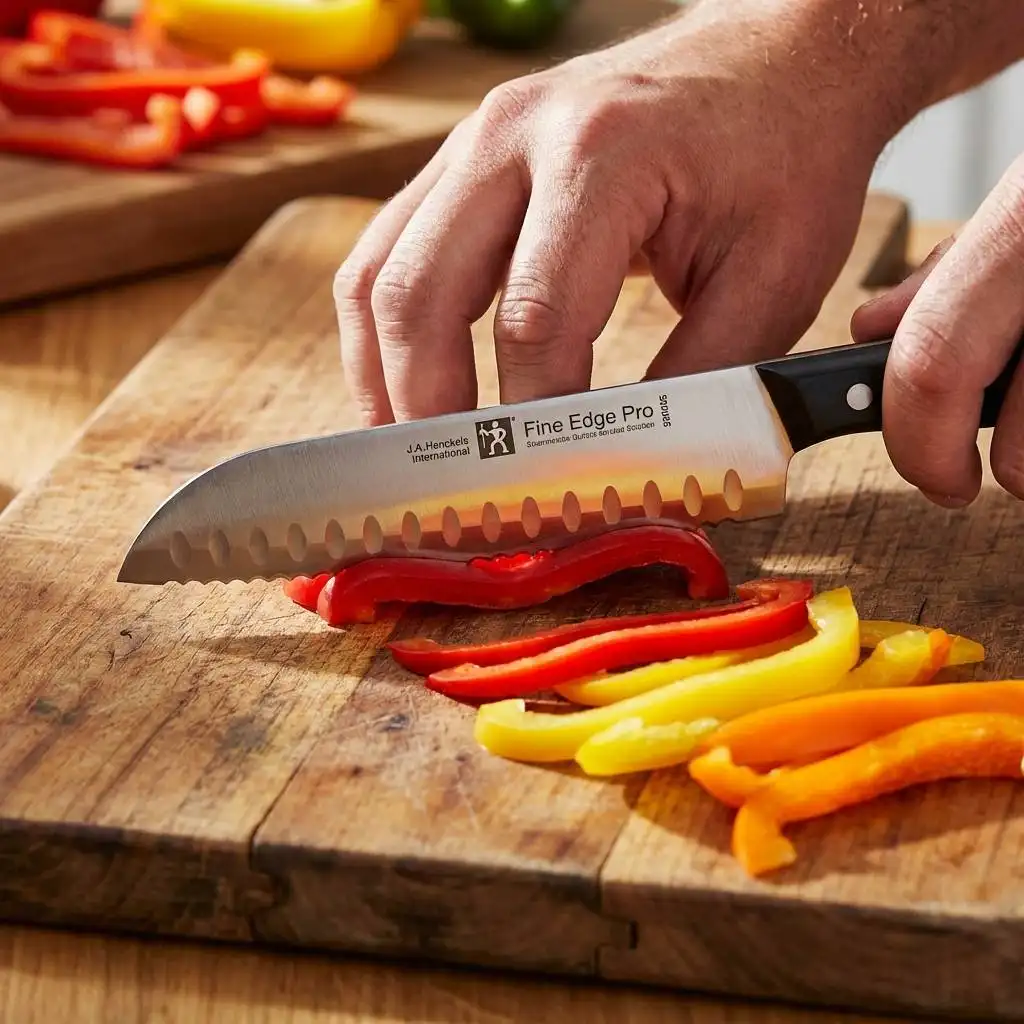
The Silvercap line carries the “J.A. Henckels International” branding. This logo features a single halberdier (the guy with the spear). If you see the “Twin” logo (two little stick figures), that is the premium Zwilling line.
The single man tells me immediately that this set was likely manufactured in China or Thailand, not Solingen, Germany. Does that mean it’s garbage? No. Manufacturing tolerances in China have improved massively in the last decade. But let’s be candid—this is not an heirloom set. You are buying a functional tool meant for daily abuse, not a piece of metallurgical art.
The Metallurgy: Hardness and Grain Structure
Now, let’s talk about the physics of the blade. The marketing copy will scream “High Quality Stainless Steel.” In chef terms, that usually implies a standard German formula, likely X50CrMoV15 or a generic equivalent.
The Hardness (HRC)
Based on the steel composition and typical heat treatment for this price bracket, these blades sit around 55-57 HRC (Rockwell Hardness Scale). For context, my Japanese Gyuto is a 63 HRC.
- The “Soft” Truth: 57 HRC is soft. In a professional kitchen, this is what we call “gummy” steel. It will not hold a razor edge through a 10-hour prep shift.
- The Upside: Because it is softer, it is incredibly tough. If you hack through a chicken joint or twist the blade in a squash, the steel will likely roll rather than chip. Chipping is catastrophic; rolling can be fixed with a honing rod.
Stamped vs. Forged
The Silvercap is a stamped knife. It is punched out of a large sheet of steel like a cookie. A forged knife is hammered from a bar, aligning the grain structure of the steel for better internal integrity. However, at this price point, a stamped knife is often superior to a cheap forged knife because it allows for a thinner geometry. A thick, cheap forged knife will wedge in carrots; these stamped blades are thin enough to slide through.
Ergonomics & The “Silvercap” Gimmick
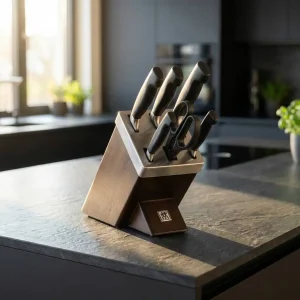
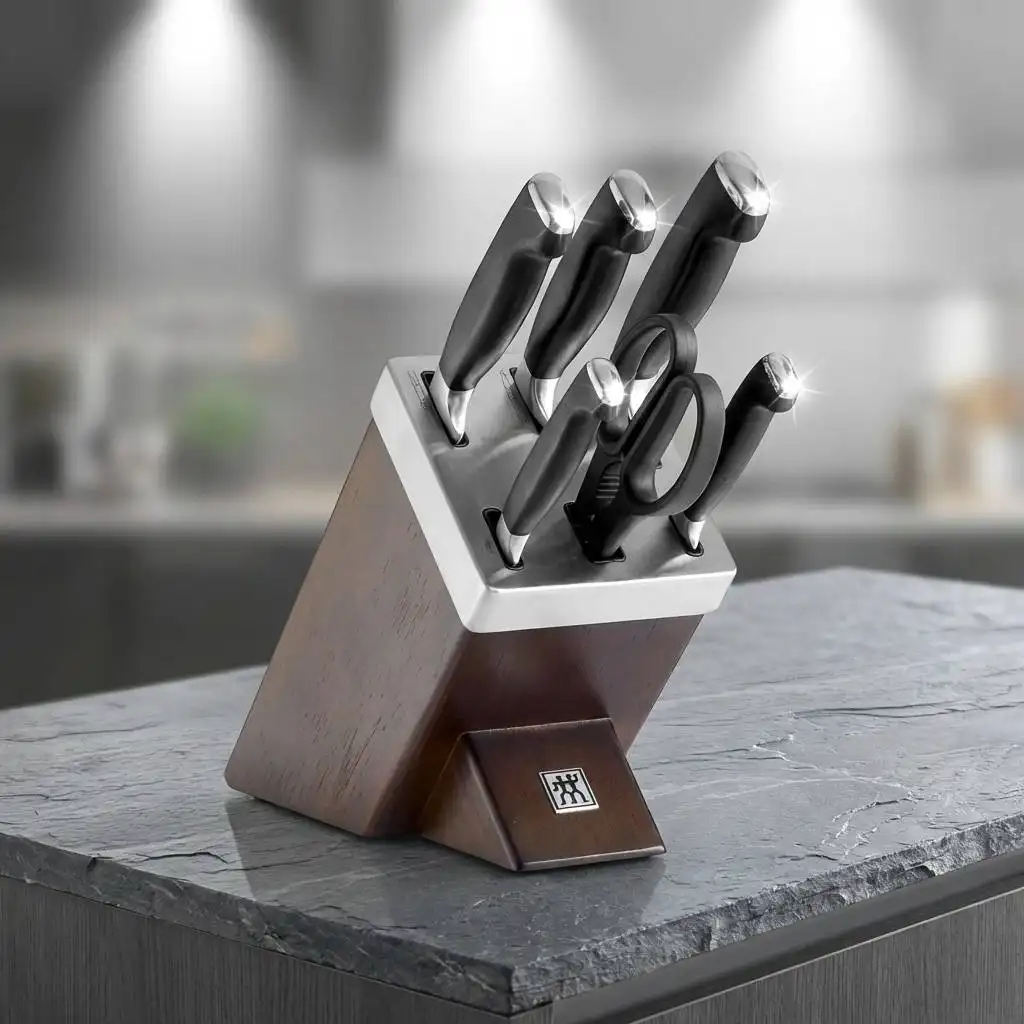
The defining feature of this set is the matte silver cap on the butt of the handle. While it looks like a stylistic choice, it serves a mechanical purpose.
Because the blade is stamped, it is light. Without the steel mass of a forged bolster, the knife would feel “handle-heavy” or flimsy. The silver cap acts as a counterweight, shifting the balance point back toward the heel of the hand. It creates the illusion of substance.
The handles are molded polypropylene. It’s a sanitary material—impervious to bacteria and moisture—but it lacks soul. The texture provides decent friction, but if your hands are covered in chicken fat, it can get slick. My main gripe with this handle design is the lack of a tapered bolster. When you use a “pinch grip” (choking up on the blade for control), the squared-off spine of the blade can dig into your index finger after twenty minutes of chopping onions.
The Board Test: Performance Breakdown
I don’t care about the box; I care about what happens on the cutting board.
The Tomato Test (Sharpness)
Out of the box, the factory edge is surprisingly aggressive. It will slice a tomato skin without crushing the flesh. However, this is often a “wire edge” left from the factory belt grinders. It cuts well for the first two weeks, then degrades rapidly once that initial burr folds over.
The Carrot Test (Geometry)
This is where the stamped construction actually helps. The blade stock is thin. When you chop a carrot, the knife passes through without cracking the vegetable in half (wedging). It’s an efficient cutter for hard root vegetables.
The Steak Knives
The 14-piece set is heavily padded with six steak knives. Note that these are usually serrated. Personally, I despise serrated steak knives—they tear the meat fibers rather than slicing them, bleeding out the juices. But for the average household, they are zero maintenance. They will cut steak for five years without ever needing to be sharpened.
Maintenance: Keeping the Edge Alive
This is the most critical part of owning the Silvercap set. Because the steel is on the softer side (55-57 HRC), the edge will misalign constantly.
You must use the included honing steel (the rod) almost every time you cook. You aren’t sharpening (removing metal); you are honing (realigning the microscopic teeth of the edge). If you skip this for a month, this knife will become a dull spoon.
The Dishwasher Warning: The box says “Dishwasher Safe.” I say absolutely not. The high heat cycles cause the polypropylene handle to expand and contract at a different rate than the steel tang. Over time, this creates gaps where bacteria breeds, and eventually, the handle will crack. Wash them by hand.
Price-to-Performance Verdict
Is the J.A. Henckels International Silvercap set a scam? No. It is a calculated product for a specific user.
Who is this for? This is the perfect “first apartment” set, or a great option for a vacation rental property. It’s also good for the home cook who is rough on tools and doesn’t want to worry about chipping a $200 Japanese blade.
Who is this NOT for? If you know what “distal taper” means or you enjoy the tactile feeling of slicing sashimi, walk away. This steel will frustrate you.
| Pros | Cons |
|---|---|
| Lightweight and reduces fatigue for casual users. | Edge retention is poor; requires constant honing. |
| Thin blade geometry cuts hard vegetables well. | “International” line lacks the fit and finish of German Zwilling. |
| Silver cap provides decent balance for a stamped knife. | Spine is sharp and uncomfortable in a professional pinch grip. |
FAQs: Henckels Silvercap Queries
Is Henckels Silvercap made in Germany?
No. The “International” brand (Single Man logo) indicates production in Asia (typically China or Thailand) or Spain. Only the “Zwilling” (Twin logo) lines are primarily manufactured in Solingen, Germany.
Can I sharpen these knives?
Yes. Despite being serrated steak knives, the chef’s knife, santoku, and paring knives in this set have fine edges. They should be sharpened at a standard 15 to 20-degree angle. Because the steel is soft, they are very easy to sharpen on a standard whetstone or pull-through sharpener.
What is the difference between Silvercap and Statement?
Both are entry-level, stamped “International” lines. The primary difference is the handle architecture. The Silvercap uses a molded handle with a weighted cap, while the Statement line features a steel end cap that is integrated differently and often feels slightly heavier in the hand. The steel quality of the blade itself is virtually identical.