Henckels International Definition 14-Piece Self-Sharpening Cutlery Set: Gimmick or Genius?
The Hook: The “Self-Sharpening” Controversy
In the professional kitchens I came up in—from the chaotic lines of Lyon to the disciplined sushi counters in Osaka—bringing a “self-sharpening” block to work would get you laughed out of the brigade. We obsess over whetstones, leather strops, and microns. We don’t drag our blades through generic ceramic slots every time we grab a knife.
But I’m not reviewing this for a Michelin-starred sous chef. I’m reviewing the Henckels International Definition 14-Piece Self-Sharpening Cutlery Set for the home cook who thinks a 1000-grit water stone is a landscaping rock. This set promises to solve the number one problem in domestic kitchens: dull knives that slip and cut fingers. It claims to maintain the edge automatically. My job is to find out if that mechanism is preserving the geometry or just grinding your steel into expensive dust.

The Specs
Let’s strip away the marketing and look at the metallurgy and physics.
- Steel Type: High Carbon Stainless Steel (Likely X50CrMoV15 or equivalent). Moderate edge retention, high corrosion resistance.
- Hardness: ~55-57 HRC. This is on the softer side compared to Japanese VG10 (60+ HRC), meaning it will roll rather than chip.
- Construction: Stamped (Single piece precision-stamped construction).
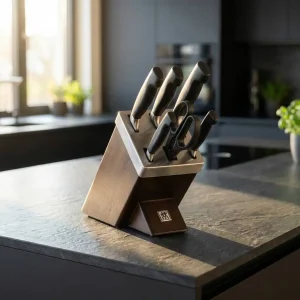
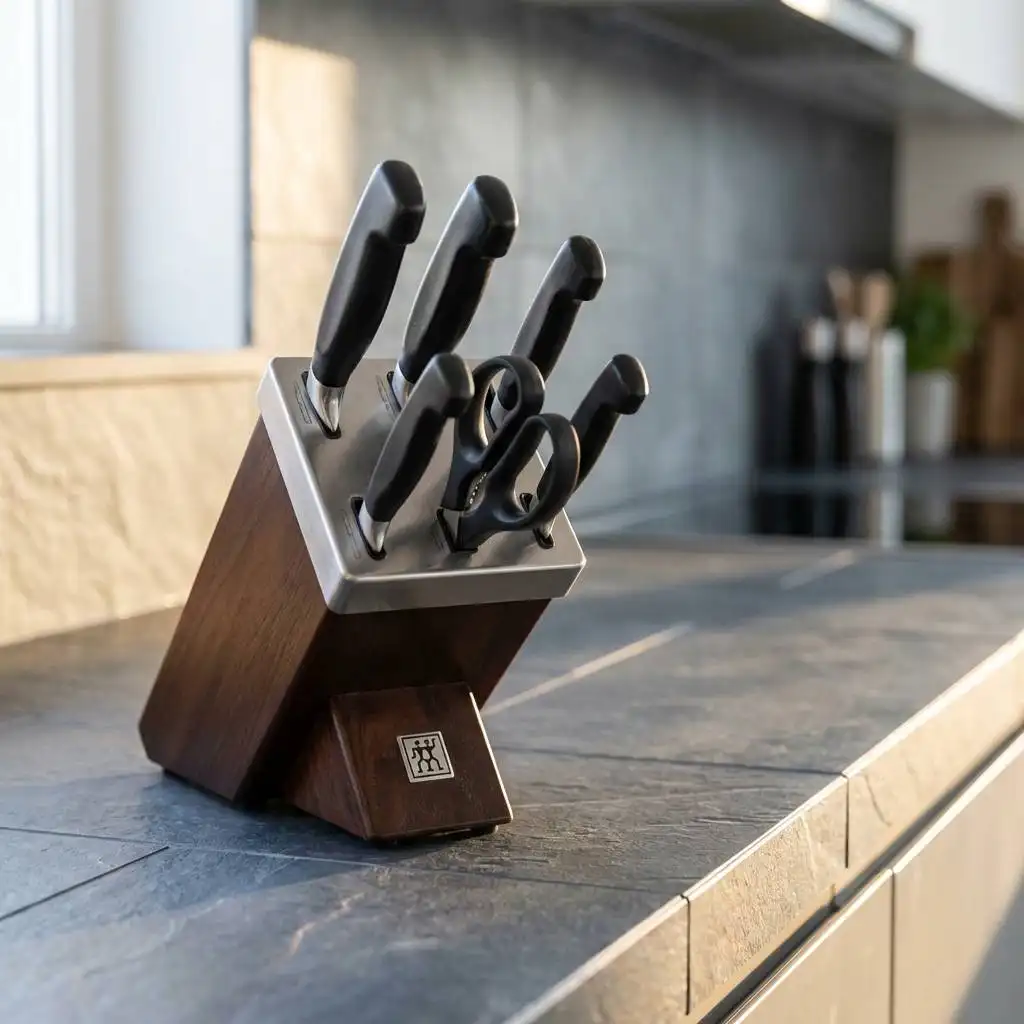
- Block Tech: “Self-Sharpening” slots featuring built-in ceramic honing wheels angled at the entry point.
- Weight: Significantly lighter than their forged counterparts (like the Classic or Pro S lines).
The Geometry & Grind
The “Definition” line is stamped, not forged. In plain English, this means the blade is cut from a large sheet of steel rather than hammered from a bar. Consequently, these blades are thin. Very thin.
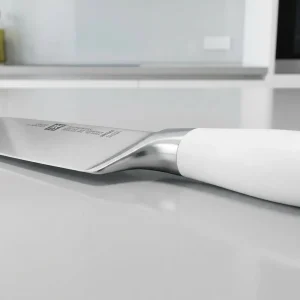
The grind is a full flat grind tapering down to the edge. Because there is no thick bolster (the metal junction between handle and blade found on forged knives), you get a full cutting edge from heel to tip. This is a massive plus for sharpening—if you were doing it manually. The spine thickness is minimal, which reduces drag, but it also means the knife lacks the forward weight needed to let “gravity do the work” when chopping hard root vegetables.
Ergonomics: The Pinch Grip Analysis
Coming from heavy German forged steel, picking up a Definition chef’s knife feels disconcertingly light. The balance point is shifted towards the handle because the blade lacks mass.
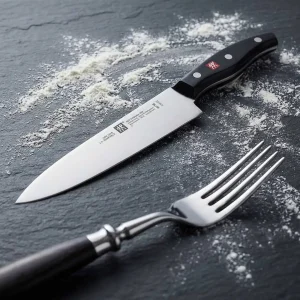
However, the handle geometry itself is decent. It’s a traditional triple-rivet design with a slight ergonomic curve at the butt. In a pinch grip (thumb and index finger on the blade spine), the spine is a bit sharp at the corners—they haven’t been rounded off (crowned) like you’d see on a $200 knife. After forty minutes of prep, you will feel a hotspot on your index finger. It’s functional, but it lacks the refined comfort of the premium lines.
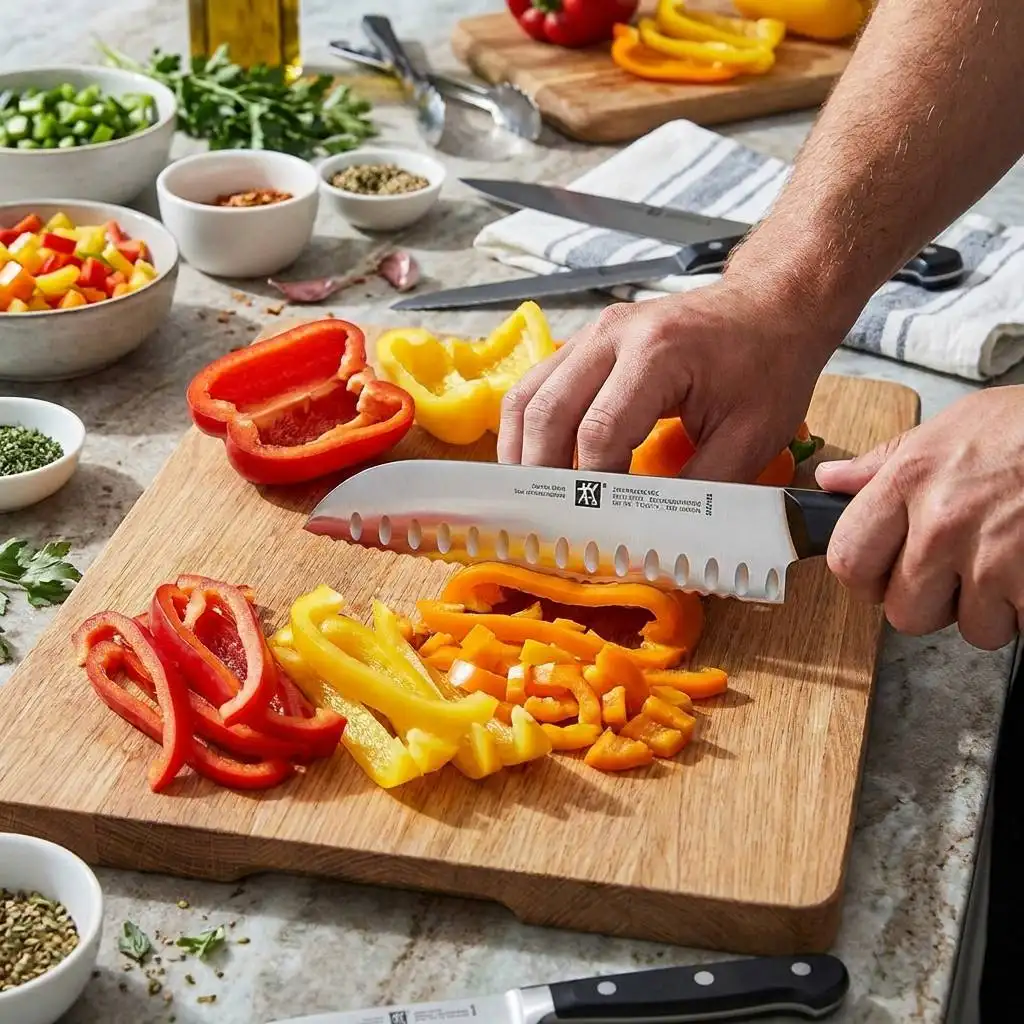
Performance: The Board Test
The Tomato Test (Horizontal Slicing)
Out of the box, the factory edge is aggressive. It bit into the tomato skin immediately without sliding. The toothy finish—typical of German machine sharpening—grabs the skin well. The thin geometry allows it to glide through the flesh without crushing it. Pass.
The Carrot Test (Vertical Chopping)
Here is where the light weight hurts it. You have to drive the knife through dense carrots manually; there’s no momentum assisting you. However, because the blade is thin behind the edge, it doesn’t “wedge” or crack the carrot like a thick tactical knife would. It cuts cleanly, provided you supply the force.
The Protein Test (Silver Skin & Fat)
Trimming silver skin off a tenderloin requires a scalpel-like edge. The Definition boning knife performed adequately but lacked the stiffness I prefer. The flexible stamped steel can wander if you aren’t controlling your angle strictly. It works, but it doesn’t inspire confidence like a rigid forged blade.
Edge Retention & Maintenance: The “Self-Sharpening” Verdict
Here is the critical part. The block slots contain ceramic rods set at a specific angle. Every time you pull the knife out or put it back, you are effectively honing the edge.
The Good: For 99% of home cooks, this is a godsend. Most people let their knives go dull for two years until they are basically spatulas. This system forces maintenance. The ceramic rods realign the microscopic teeth of the edge (honing) and remove a tiny amount of metal (sharpening).
The Bad: If you are a control freak like me, this is a nightmare. You cannot control the angle. Over time, these pull-through mechanisms tend to remove more steel than necessary, eventually changing the profile of the blade (turning a flat edge into a recurve). However, for this specific soft steel (57 HRC), the system makes sense. The steel is soft enough to respond well to the ceramic rods. It’s a brutalist solution, but it works for the intended audience.
The Final Cut
If you know what a “burr” is, or if you own Japanese water stones, do not buy this set. You will hate the lack of control.
However, if you are cooking dinner for a family of four and you just want a sharp knife every single time you reach for the block without learning a new trade skill, the Henckels International Definition 14-Piece Self-Sharpening Set is a functional workhorse. It sacrifices long-term blade geometry for short-term convenience—a trade-off that, frankly, makes sense for most households.
Price-to-Performance Ratio: Solid B+
You aren’t paying for heirloom steel; you are paying for the engineering in the block that solves the “dull knife” problem for you.